Skip to content


How to Turn Existing SEO Content Into AEO-Optimised Content
Search is changing. People are no longer relying solely on traditional search engines to find information. They are increasingly asking questions in conversational language and expecting direct, useful answers from search engines and AI-powered platforms.
This shift has made Answer Engine Optimisation (AEO) an important part of modern content strategy. However, adopting AEO does not mean throwing away your existing SEO content and starting again.
Instead, you can turn your existing SEO content into AEO-optimised content by making a few strategic changes to its structure, clarity and usefulness.
In this guide, we will explore how to update existing blog posts so they are better suited to answer-focused search while continuing to support traditional SEO.
What Is AEO?
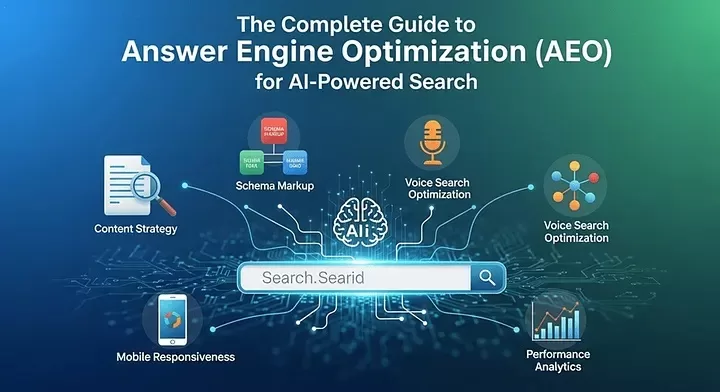
Answer Engine Optimisation, or AEO, is the process of creating and structuring content so that search engines and AI-powered answer platforms can easily understand, extract and present the information.
Traditional SEO often focuses on helping a webpage rank for relevant keywords. AEO takes this step further by focusing on providing clear and direct answers to specific questions.
For example, instead of simply targeting the keyword “content marketing strategy”, an AEO-focused article might directly answer:
“What is a content marketing strategy?”
The answer should be clear, concise and supported by useful information.
Why Optimise Existing SEO Content for AEO?
If your website already has a library of SEO content, you have a valuable starting point. Your existing articles may already have backlinks, organic traffic, keyword rankings and established authority.
Updating these articles can therefore be more efficient than creating entirely new content.
AEO optimisation can help you:
- Make existing content easier to understand.
- Answer user questions more directly.
- Improve the structure and readability of articles.
- Target conversational search queries.
- Increase the chances of appearing in answer-focused search features.
- Keep older content useful and relevant.
The goal is not to replace SEO with AEO. SEO and AEO should work together.
1. Identify Your Best Existing Content
Start by reviewing your existing blog posts and identifying which ones are worth updating.
Look for articles that already:
- Receive organic traffic.
- Rank for relevant keywords.
- Have backlinks.
- Cover topics with strong search demand.
- Answer questions related to your products or services.
- Have the potential to become more comprehensive.
You do not need to update every article at once. Start with pages that already demonstrate SEO potential.
For example, if you have a blog post ranking on page one for a broad topic but it does not directly answer common questions, it could be an excellent candidate for AEO optimisation.
2. Understand the Questions Your Audience Is Asking
AEO is heavily focused on questions and answers.
Review your existing article and identify the questions a reader is likely to ask before, during or after reading it.
You can use sources such as search suggestions, relevant discussions, customer queries and your existing website data to discover these questions.
For example, an article about email marketing could include questions such as:
- What is email marketing?
- How does email marketing work?
- What are the benefits of email marketing?
- How often should you send marketing emails?
- What makes an email campaign successful?
Adding relevant questions gives your content a more conversational structure and helps readers find the information they need.
3. Add Direct Answers to Important Questions
Once you have identified relevant questions, answer them directly.
Avoid making readers search through several paragraphs to find a simple answer.
A useful approach is to provide a concise answer immediately after the heading, followed by additional explanation.
For example:
What Is AEO?
AEO is the practice of optimising online content so search engines and AI-powered answer platforms can easily understand and use it to answer users questions.
You can then expand the definition with examples, benefits and practical advice.
This structure is useful for readers because they can quickly find the answer while still having the option to explore the topic in greater depth.
4. Restructure Your Content With Clear Headings
Content structure is important for both SEO and AEO.
Review your existing article and break large sections into logical headings and subheadings.
Instead of having one long section about SEO strategy, for example, consider using headings such as:
- What Is a SEO Strategy?
- Why Is SEO Important?
- How Do You Create a SEO Strategy?
- What Are the Most Important SEO Techniques?
- How Do You Measure SEO Success?
This makes your content easier to scan and helps clearly communicate the purpose of each section.
5. Use Lists, Tables and Step-by-Step Instructions
AEO-friendly content should be easy to understand and extract.
Where appropriate, transform complicated information into:
- Bullet-point lists.
- Numbered steps.
- Comparison tables.
- Definitions.
- Checklists.
- Frequently asked questions.
For example, instead of explaining five SEO techniques in one long paragraph, list each technique separately and provide a short explanation.
This improves readability and makes important information easier to identify.
6. Optimise for Conversational Search
People often phrase questions differently when speaking to an AI assistant compared with typing a traditional keyword into a search engine.
- Your existing SEO article may target phrases such as “local SEO services”, while users may ask:
“How can I improve my local SEO?”
Think about the natural language your audience uses.
Include conversational questions and long-tail variations where they genuinely fit the topic. Do not force keywords into your content simply for the sake of optimisation.
The priority should always be helpful, natural and accurate information.
7. Strengthen Your Content With Reliable Information
AEO is not simply about writing short answers. Your content still needs depth, accuracy and credibility.
Review older articles and check whether the information is still current. Remove outdated statistics, update examples and correct anything that is no longer accurate.
Where appropriate, support important claims with credible sources and explain concepts clearly.
Your aim should be to create content that is useful enough for a reader to trust and valuable enough for an answer engine to reference.
8. Add an FAQ Section
An FAQ section can be a simple way to make existing content more answer-focused.
Look for genuine questions related to your topic and answer them concisely.
For example, an article about technical SEO might finish with:
Frequently Asked Questions
What is technical SEO?
Technical SEO involves improving the technical aspects of a website to help search engines crawl, understand and index its pages.
Why is technical SEO important?
It can help search engines access and interpret your website while also supporting a better user experience.
Make sure your FAQs provide genuine value rather than simply adding questions to manipulate search results.
9. Improve the Introduction and Conclusion
Your introduction should quickly explain what the article is about and what the reader will learn.
Avoid lengthy introductions that delay the answer.
Likewise, your conclusion should summarise the main points and provide a useful next step.
This creates a clearer journey from question -> answer -> explanation -> action.
10. Review Internal Links and Related Content
Finally, connect your updated article to other relevant pages on your website.
For example, an article about AEO could link naturally to related content about keyword research, technical SEO, content strategy and structured data.
Internal linking helps users discover additional information and gives search engines more context about the relationships between your pages.
SEO and AEO Should Work Together
Turning SEO content into AEO-optimised content is not about abandoning traditional search optimisation.
Your existing SEO fundamentals still matter, including relevant keywords, search intent, quality content, internal linking, technical performance and authority.
AEO simply encourages you to make that content more direct, structured, conversational and useful.
Instead of asking, “How can I add more keywords?”, start asking:
“What question is my audience asking, and how quickly can I give them the best possible answer?”
That change in approach can make your existing content more useful to people and better prepared for the evolving search landscape.
Conclusion
You do not need to rebuild your entire website to start with AEO. Your existing SEO content can provide a strong foundation.
Start by identifying your highest-potential articles, researching the questions your audience asks, adding direct answers, improving headings and structure, incorporating useful lists and FAQs, and updating outdated information.
With a consistent approach, you can transform existing SEO content into valuable, answer-focused resources that are better suited to how people are searching today.
The future of search is not simply about ranking for keywords. It is increasingly about being the clearest, most useful and most trustworthy answer to a user’s question.
Market Forever focuses on creating search-friendly, user-focused content that delivers measurable results. With an understanding of evolving search trends, SEO, and Answer Engine Optimisation (AEO), they help businesses turn existing content into valuable resources that are easier for both search engines and AI-powered answer engines to understand, discover, and recommend. They help brands improve their online visibility, strengthen their content strategy, and stay ahead in the changing search landscape.
Categories
- Affiliate Marketing (10)
- Business Partners (5)
- Content Writing (9)
- Email Marketing (12)
- Event Marketing (1)
- Graphics Design (9)
- Influencer Marketing (8)
- Marketing Partners (4)
- Performance Marketing (1)
- PPC (8)
- SEO (9)
- Social Media Marketing (12)
- Technology Partners (7)
- Tips (9)
- Video Marketing (2)
- Web Development (5)
Recent Posts