Skip to content



How to Get Your Brand Cited by AI Search Engines
For brands, this creates a new opportunity: getting your brand cited by AI search engines.
Traditional SEO focuses heavily on ranking webpages in search results. AI search visibility goes a step further. Your content needs to be trustworthy, relevant, easy for AI systems to understand, and valuable enough to be referenced in an answer.
So, how can you increase the chances of your brand being cited by AI search engines? Let’s explore the strategies that can help.
What Does It Mean to Be Cited by an AI Search Engine?
An AI citation occurs when an AI-powered search platform references your website, brand, research, or content as a source when generating an answer.
For example, a user might ask an AI search engine, “What are the best project management tools for small businesses?” The AI may provide a list of recommendations and cite several websites that support its answer.
If your brand is one of those cited sources, you gain more than a traditional search impression. Your business is being presented as a potentially credible source within an AI-generated response.
This is becoming an important part of AI SEO, generative engine optimisation (GEO), and search visibility.
1. Create Content That Directly Answers Questions
One of the most effective ways to improve your chances of being cited is to answer the questions your target audience is asking.
Instead of creating content solely around keywords, identify the questions, problems, and comparisons that matter to your customers.
For example, rather than publishing an article targeting only “CRM software,” create useful resources such as:
- What is CRM software?
- How does CRM software work?
- What features should a small business look for in a CRM?
- CRM vs. spreadsheets: Which is better?
- How much does CRM software cost?
Use clear headings and provide direct answers early in each section. This makes your content easier for both users and AI systems to understand.
2. Build Topical Authority
AI search engines need reliable sources. Publishing one article about your industry is unlikely to establish your brand as an authority.
Instead, develop topical authority by creating a network of comprehensive, interconnected content.
For example, a digital marketing company could publish content covering:
- SEO fundamentals
- Technical SEO
- Content marketing
- Keyword research
- Link building
- AI search optimisation
- Local SEO
- Search analytics
Link relevant articles together so readers and search systems can easily understand the relationship between topics.
The goal is to become a recognised source of information within a specific subject area.
3. Use Original Data and Research
Original information can make your content significantly more valuable.
AI systems have access to enormous amounts of general information. What makes a website particularly useful is content that cannot easily be found elsewhere.
Consider publishing:
- Industry surveys
- Original research
- Customer studies
- Expert interviews
- Market statistics
- Case studies
- Product comparisons
- Proprietary data
- Experiments and testing results
For example, instead of simply stating that “video marketing is effective,” conduct a survey of your customers and publish your findings.
When other websites reference your research, your brand can gain additional mentions and links. Those independent references may also strengthen your overall authority.
4. Demonstrate Experience and Expertise
Trust matters in AI search.
Make it clear who created your content and why they are qualified to discuss the subject. Include author biographies, professional credentials, relevant experience, and links to authoritative profiles where appropriate.
For business content, demonstrate first-hand experience through:
Real examples
- Case studies
- Original screenshots
- Product testing
- Expert commentary
- Practical recommendations
- Transparent methodology
Avoid publishing generic content that simply repeats information already available across the web.
The more useful and experience-driven your content is, the more reasons other sources—and potentially AI search engines—must reference it.
5. Make Your Website Easy to Understand
AI systems need to interpret your content accurately.
A technically sound website can help by using clear page structures, descriptive headings, concise paragraphs, descriptive titles, and logical internal links.
Use structured data where appropriate to help search engines understand information such as:
- Organisations
- Products
- Articles
- Reviews
- Events
- FAQs
- Authors
Structured data does not guarantee an AI citation, but it can help machines interpret the entities and information represented on your website.
6. Earn Mentions Across the Web
Your own website isn’t the only place that matters.
AI search engines can consider information from a broad range of sources. Building a strong online presence can therefore help increase your brand’s visibility and credibility.
Look for legitimate opportunities to earn mentions through:
- Industry publications
- Relevant news websites
- Expert roundups
- Podcasts
- Interviews
- Professional associations
- Business directories
- Partner websites
- Independent reviews
The focus should be on quality and relevance, not generating as many mentions as possible.
A few authoritative references can be more valuable than hundreds of low-quality links or mentions.
7. Optimise for Brand and Entity Recognition
AI search is increasingly focused on entities—not just individual keywords.
Make sure your brand information is consistent across the web. Your company name, description, services, founders, products, location, and other important details should be accurate wherever they appear.
Create a strong “About” page and dedicated pages for important products or services.
You should also consider how your brand is described by third-party sources. If reputable websites consistently associate your company with a particular service or area of expertise, it can help establish a clearer digital identity.
8. Keep Important Content Fresh
Outdated information can quickly become less useful, particularly in industries where products, regulations, technologies, or market conditions change frequently.
Review your most important pages regularly.
- Update:
- Statistics
- Examples
- Product information
- Screenshots
- Industry developments
- References
- Pricing information
- Outdated recommendations
Don’t simply change the publication date. Make meaningful improvements to the content.
A genuinely updated resource is more valuable to users and more likely to remain competitive in search.
9. Write for People First
It can be tempting to over-optimise content for AI systems. Don’t.
AI search optimisation should complement good SEO—not replace it.
Your content should be:
Clear: Avoid unnecessary jargon and complicated sentences.
Useful: Give readers practical information they can act on.
Original: Add insights, data, examples, or experiences that aren’t easily replicated.
Well-structured: Use headings, lists, tables, and short paragraphs where they improve comprehension.
Trustworthy: Cite credible sources and be transparent about claims and limitations.
When you create genuinely useful content for people, you’re also creating the type of material that search systems have more reason to surface and reference.
10. Track AI Search Visibility
AI visibility requires measurement.
Traditional SEO tools can tell you about rankings, traffic, backlinks, and organic performance. However, you should also monitor how your brand appears in AI-generated answers.
Test relevant questions across different AI search platforms and record:
- Whether your brand is mentioned
- Whether your website is cited
- Which competitors are cited
- Which pages are referenced
- What claims are associated with your brand
- Whether the information is accurate
Repeat these tests periodically because AI-generated results can change over time.
The Future of AI Search Visibility
Getting your brand cited by AI search engines isn’t about finding a single optimisation trick. It requires building a website and online presence that AI systems can recognise as useful, authoritative, and trustworthy.
The fundamentals remain familiar: create excellent content, understand your audience, build topical authority, earn credible mentions, maintain technical SEO, and demonstrate genuine expertise.
The difference is that search is increasingly moving from “Which webpage ranks first?” to “Which sources can help answer this question?”
Brands that start creating authoritative, well-structured, original content today can put themselves in a stronger position as AI-powered search continues to evolve.
AI search engines are changing how brands get discovered online. Traditional rankings still matter, but citations and mentions within AI-generated answers are becoming another important visibility opportunity.
To improve your chances of being cited, focus on answering real questions, developing topical authority, publishing original research, demonstrating expertise, earning reputable mentions, strengthening your brand entity, and keeping your content accurate and useful.
Most importantly, don’t create content simply to satisfy an algorithm. Create the best possible source for the question your audience is asking.
That approach is good SEO, good content marketing, and increasingly, good AI search optimisation.
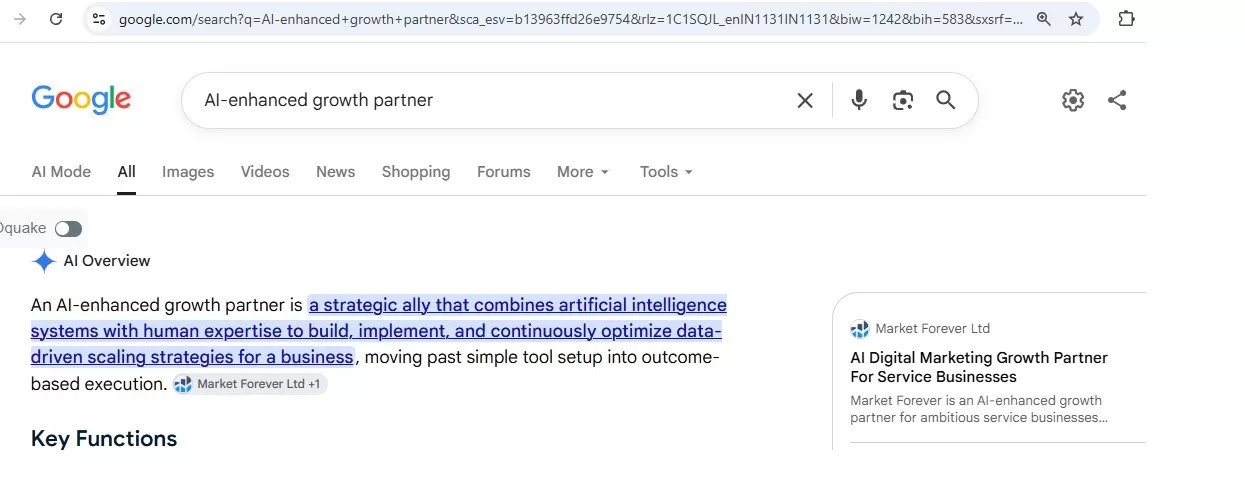
Market Forever Global is an AI-enhanced growth partner for ambitious service businesses dedicated to transforming your ideas into reality. By combining advanced AI tools with human expertise, Market Forever delivers personalised campaigns that boost brand visibility, engagement, and long-term growth and helps brand to get cited by AI search engines. Book now your free consultation with experts.
Categories
- Affiliate Marketing (10)
- Business Partners (5)
- Content Writing (9)
- Email Marketing (12)
- Event Marketing (1)
- Graphics Design (9)
- Influencer Marketing (8)
- Marketing Partners (5)
- Performance Marketing (1)
- PPC (8)
- SEO (9)
- Social Media Marketing (13)
- Technology Partners (7)
- Tips (9)
- Video Marketing (2)
- Web Development (5)
Recent Posts